
Johnny Waller
This project was initiated to find answers to a specific goal: identify the location of Army Post Offices during World War Two that were evident on a soldier’s correspondence.
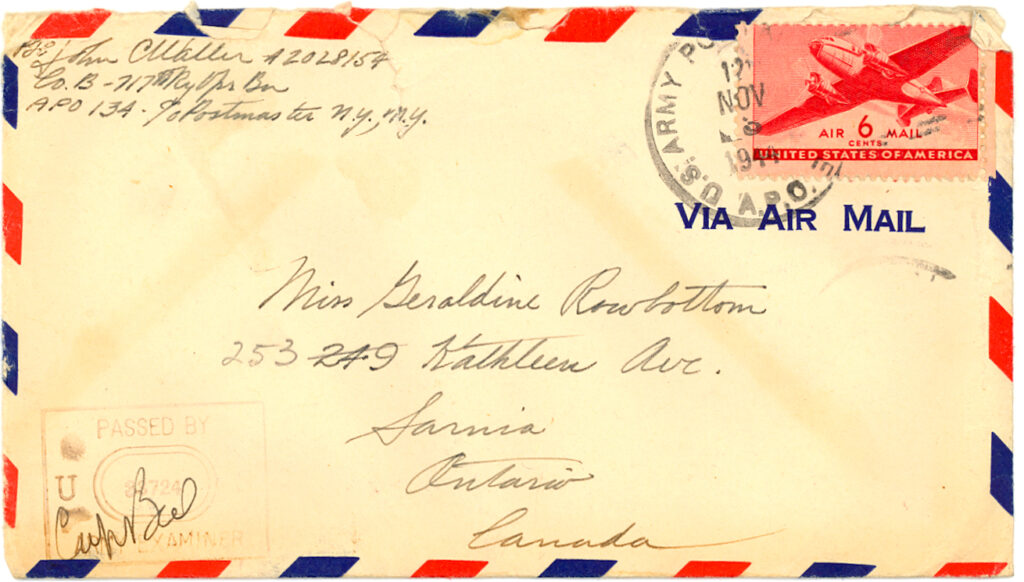
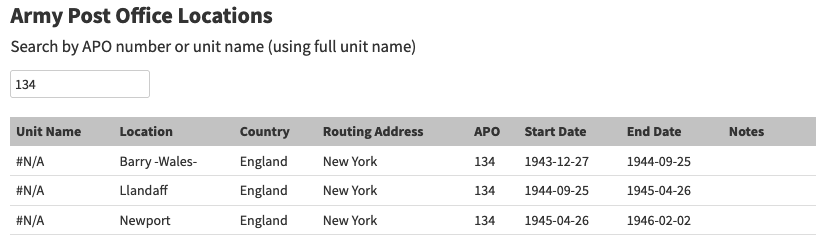
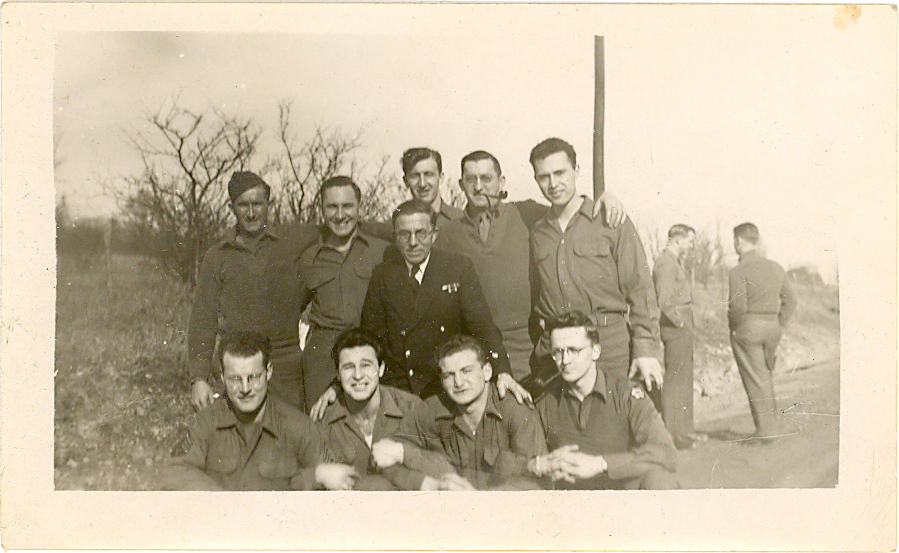
For example, Private First Class John C. Waller, part of the 717th Railway Operators Battalion, wrote to his sweetheart Geraldine Rowbottom from APO 134 on October 27th, 1944. Using the database, one can enter the APO number and check the dates to see where the APO was located at that time.
A quick search shows that APO 134 was located at Llandaff, a suburb of Cardiff, Wales. Further research shows that Cardiff had significant rail yards and hospitals, which explains why Waller spent a significant amount of time there maintaining the hospital trains that transported wounded soldiers around the country.
Using this approach, one can track Waller’s correspondence throughout the war, identifying each location from which he sent mail and providing additional information to make sense of the contents of each letter.
Wolfgang J. Nauke
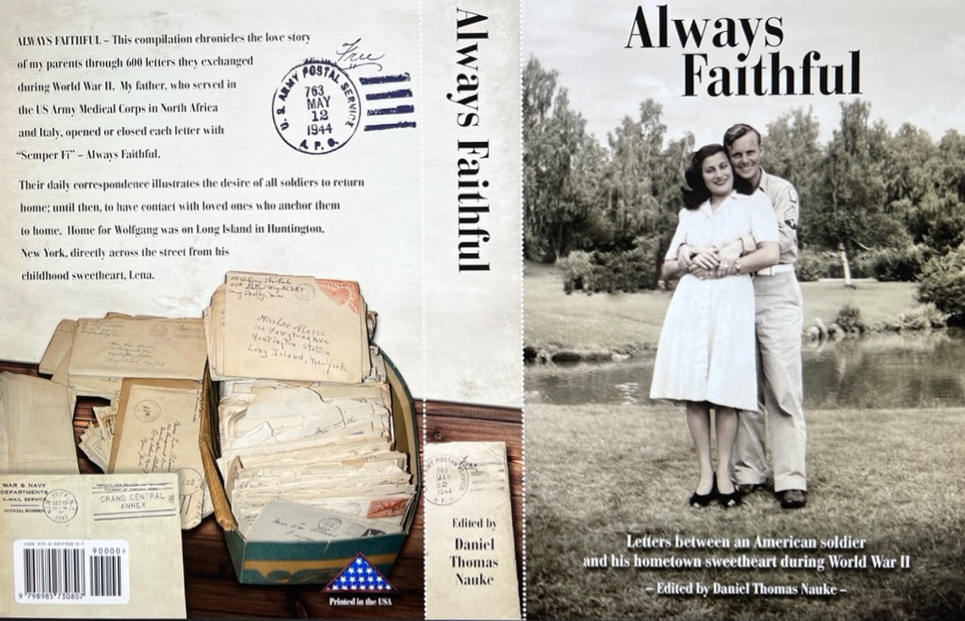
While writing a book about his father’s service in World War II, Daniel Nauke spent months trying to find additional information about the locations where Wolfgang J. Nauke was stationed during his tour. Daniel had access to correspondence between his father and mother that included APO numbers but had no way to decode the numbers and connect them with geographical locations.
The information in the APO database indicated that Nauke served in medical battalions in the North African and Italian campaigns, spending time in different towns in Tunisia and Italy. One of his posts, the 114th Station Hospital, was a neuropsychiatric hospital that dealt with psychological traumas of warfare first known as “shell-shock” and now referred to as post-traumatic stress disorder (PTSD).
During his tour, Nauke earned seven commendations, including a French Croix de Guerre 1939–1945. Connecting Nauke’s military service to specific locations throughout Africa and Europe led to further areas of research that help tell the story of his service and life.
Museum Exhibit

On a visit to the National Infantry Museum, I was delighted to see an exhibit that featured letters sent from servicemen to their friends and families back home. The letters on display behind the glass were accompanied by notes, as seen in this example from Private First Class Gerald A. White.
The item label included information about White’s speciality and unit but included no information about his location when sending the letter. As a good soldier aware of the censorship rules, White included no information about his location either. The return address on his letter is Company M, 23rd Infantry, APO #2.
At the time, I only had a prototype of the APO database online but the data was searchable. I entered the APO number and looked for the appropriate date. According to the data, White was near Gottingen, Germany on April 22, 1945. The APO records show frequent relocation throughout that period, which matches the action of the war. The US Army was in the final stages of the drive to Berlin in April 1945 and White was right there in the action.
This kind of real-time research is made possible by the APO database, which allows museum visitors and staff to dig deeper into the letters and correspondence they encounter. The APO data helps connect the narrative to a physical space and expand the context for understanding the soldiers’ experiences.
Smith Collection
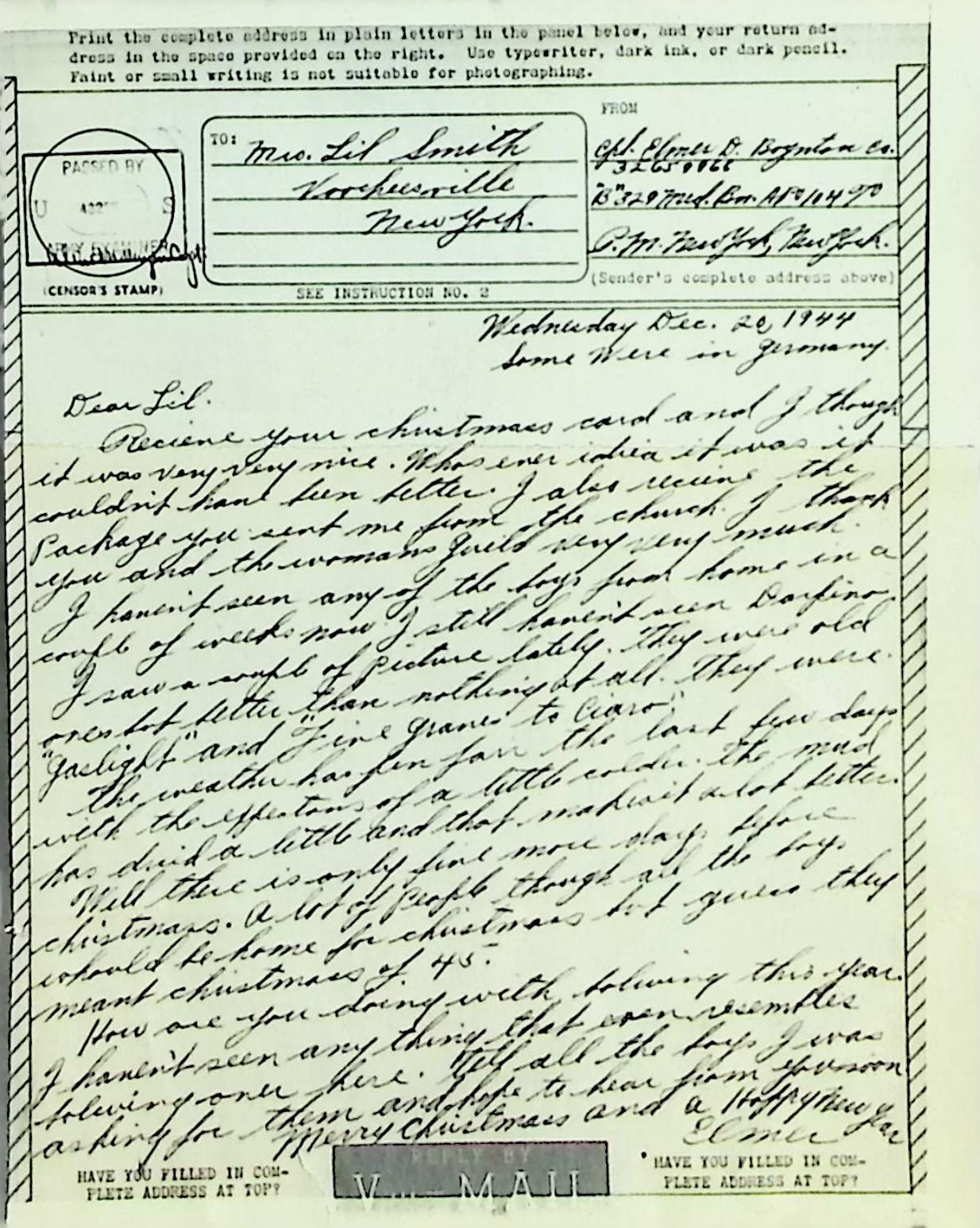
The Voorheesville Public Library cares for an important collection of WWII correspondence amassed by Elizabeth ‘Lil’ Smith (1904-1991). During the war, Smith wrote to over 150 soldiers who were members of the Voorheesville, NY community. The collection contains hundreds of letters sent to Smith by enlisted men and women from both the European and Pacific Theaters. The WWII Army Post Office Locations database is instrumental not only in unlocking where each letter originated but also in building shared experiences amongst the individuals represented in the collection. The APO database will assist the library in creating a virtual 3-D globe displaying where each letter writer was located during the war.
